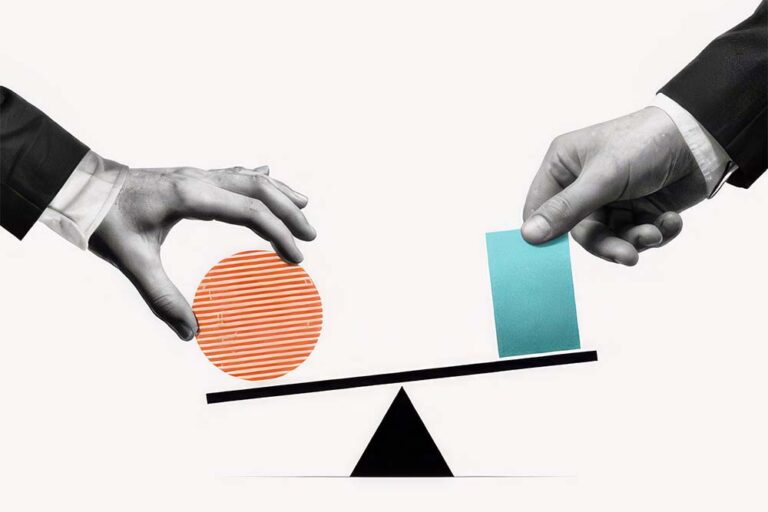


Most organizations don’t intend to make poor leadership decisions. They follow a pattern that we see happen consistently.
The brilliant engineer becomes department head. The rainmaker salesperson gets a VP title. The technical virtuoso takes the executive chair.
People who are good at their jobs get promoted. On paper, it makes sense. In practice, these individuals are often not positioned to succeed — and they frequently take entire teams down with them.
Although a vast majority of employers now say they value emotional intelligence over technical skills when evaluating candidates, they continue promoting their most technically skilled people into leadership roles, regardless of their ability to actually lead people. This isn’t a minor operational hiccup. It’s a systemic failure that’s costing companies millions.
Getting There Is Just the Start
Technical capability may earn the elevated role. But what sustains performance and achieves results once you’re in it?
What I’ve seen across consulting engagements is that the leaders in the room are smart and talented — but the ones who are brilliant jerks repel people. No one wants to work with them. There is considerable energy spent either getting into their good graces or avoiding them entirely. That energy could be better directed toward solving problems and meeting the needs of the business. One client I worked with lost seven of their best leaders because of a single individual’s poor leadership performance. To those team members, the cost of doing their job alongside that person was higher than the benefit of the job itself.
I’ve also seen leaders who didn’t have the deepest technical expertise but knew how to leverage the talents of others, build alliances with people who had resources, and develop relationships with those who had the deep technical knowledge needed for the team to succeed. They assembled coalitions that enabled them to solve problems, develop others, and raise the level of performance for the entire organization. Am I saying that exceptional leadership capability is more important than technical proficiency? Not necessarily. But, without well-developed emotional intelligence, even the highest level of product or service knowledge is not enough for a leader to bring out the best in their teams.
EQ is the single strongest predictor of performance across all types of jobs. Because at the executive level, leadership becomes less about what you know and more about how you help others achieve their goals, how you make decisions under pressure, and how you handle tension. It’s how teams experience you when the stakes are high and how you create clarity when information is limited or murky. This is where emotional intelligence emerges as a performance variable — because while technical performance is easy to measure through metrics like output, efficiency, and revenue, it’s much harder to assess how effectively someone creates an environment where others can perform at their best.
EQ is the single strongest predictor of performance across all industries.
So, organizations default to what they can quantify and promote accordingly.
The pattern is painfully predictable: Promote the top performer, watch team morale crater, lose high performers, repeat. Yet organizations keep making the same promotion decisions, expecting different results. Isn’t that the definition of insanity?
What it Costs
When leadership readiness is determined by technical strength alone, the impact shows up quickly, in a variety of ways.
1. Talent hemorrhaging. Employees with managers who have high emotional intelligence are 4x less likely to leave than those reporting to low-EQ managers (Gallup). This is important: people don’t usually leave companies. They leave managers who lack the emotional intelligence to lead effectively.
2. Performance degradation. Most organizational issues are relational rather than technical. This means a leader’s emotional intelligence and ability to engage and develop direct reports has an outsized impact on team performance.
3. Culture toxicity. Leaders lacking self-regulation create environments where talent can’t thrive, even when technical capabilities exist.
When you promote someone who can’t manage their emotions or read their team, you’re not just risking one bad hire. You’re risking the performance of everyone who reports to them.
None of this happens on purpose. I’ve seen leaders with exceptional technical capabilities unintentionally create environments in which information slows down because people are walking on eggshells, decisions narrow because fewer perspectives are brought forward, and high performers disengage quietly before leaving.
This is an emotional intelligence problem, not a technical one. Acknowledging it is the first step to solving it.
Why Organizations Keep Getting It Wrong
The persistence of this problem reveals several uncomfortable truths about how organizations actually operate.
By the time someone is in a leadership role and floundering, the cost of their low EQ is already visible, in turnover, mistakes caused by mixed signals, and diminished performance.
There’s also a more subtle dynamic at play. Technical performance is easier to recognize and reward. It’s clear, widely understood, and measurable.
Emotional intelligence requires judgment. It requires leader to evaluate what doesn’t appear on a scorecard. And it often requires delaying or rethinking promotions and opportunities.
That seems like a big sticking point in a lot of organizations. But not making changes is a choice itself. In fact, it means not only failing to develop EQ, it means actively selecting against it. Low-EQ leaders don’t just struggle to lead; they perpetuate the problem by promoting other low-EQ leaders. Why? Because emotional intelligence isn’t simply a skill gap. It’s also a values gap. Leaders who lack EQ fundamentally view it as weakness rather than strength. They promote people who “don’t complain about feelings” and “just get things done,” which really means “don’t ask me to care about the human cost of how we operate.” The selection bias compounds with every generation of leadership.
Low-EQ leaders are easier for executives to manage. Here’s the part that implicates the C-suite: Low-EQ leaders are often preferred by low-EQ executives because they’re easier to work with. They don’t push back on toxic culture. They don’t make emotional demands. They don’t advocate for their people in ways that create friction upward. When you promote someone without emotional intelligence, you’re often choosing someone who won’t challenge you on the things that make you uncomfortable.
Recency bias overrides long-term thinking. We often promote based on recent wins — the closed deal, the shipped product, the solved crisis — without assessing whether someone can create the conditions for sustained team success.
The “brilliant jerk” fallacy. Some organizations still believe that toxic high performers are worth the collateral damage. But when we don’t scrutinize emotionally manipulative behavior, we enable leaders who know how to ” motivate people to act against their own best interests. That’s not only self-defeating, but it’s also dangerous.
What Stronger Leadership Looks Like
The organizations that get this right are not lowering the bar on technical performance. They’re raising it on leadership readiness.
They’re asking a different question before promotion decisions get made.
Enable ascending leaders to develop the necessary skills before they get the title, not after they start breaking things.
Not just, “Can this person do the work at the next level?” But also, “Can this person create the environment in which others can succeed?” That shift changes how leaders develop.
Measuring emotional intelligence competencies with proven tools before promotion decisions gives individuals time to build their EQ through targeted executive coaching focused on self-awareness, self-regulation, empathy, and relationship management. The focus is readiness, not remediation — enabling ascending leaders to develop the necessary skills before they get the title, not after they start breaking things.
I once coached a leader who was seen as the clear successor to a senior executive. This leader had performed well in the field, demonstrated deep subject matter expertise, but was also willing to hear the ideas of others and incorporate their suggestions to gain support and move issues forward. From the outset of our engagement, this leader demonstrated three critical elements. They were open to insights provided by others and by the reliable, valid instruments we deployed. They took full ownership of those insights and the behavioral changes required. And then they committed to transform the way they worked. We worked hard during our sessions to process real situations and perform after-action reviews to identify what could be done differently. The organization’s investment in coaching — and this person’s willingness to lean into every session — yielded dividends. When they were promoted, they were able to make immediate contributions to the bottom line because the organization had invested early in their development, and they were open to learning, took full ownership of their growth opportunities, and committed to transforming their approach to work as a leader. When the opportunity presented itself, they were ready.
Hitting pause on a promotion — or thinking long-term about succession before the need is urgent — takes discipline and dedication. But these decisions protect performance over time.
The Signal Teams Receive
Every promotion decision sends a message, regardless of what your values poster says. Each time you promote a low-EQ technical star, you’re broadcasting to the entire organization what leadership actually values.
You can’t afford to promote technical brilliance without emotional intelligence.
If technical excellence is the only consistent signal, that’s what people will optimize for. If leadership effectiveness – how people are led, how teams perform, how conditions for success are created – is part of the decision, then that becomes a cultural norm.
Over time, those decisions compound. They either create constant churn or build successful, effective teams.
The question isn’t whether emotional intelligence matters. Decades of research have settled that debate. The question is whether your organization has the discipline to make it a non-negotiable leadership criterion—and the courage to delay a promotion until someone is actually ready to lead people, not just manage work.
Because here’s what the data keeps proving: You can’t afford to promote technical brilliance without emotional intelligence. The people who work for those leaders won’t stick around long enough for it to matter.
Richard A. Smith is the Founder and Managing Partner of Benton + Bradford Consulting, where he works with Fortune 500 executives on the intersection of human capital and business strategy. With 25+ years of operational leadership experience and certifications in Hogan Assessment and EQ360, Richard helps organizations close critical leadership gaps through assessment-led, operationally-grounded executive coaching.
What’s your experience with technically brilliant but emotionally unintelligent leaders? Share your thoughts in the comments.