

Most succession plans look solid, right up until they’re truly tested. Org chart boxes hold names. Readiness ratings are assigned. Then a leadership transition becomes imminent and the organization suddenly scrambles.
The issue isn’t that leaders don’t take succession seriously. It’s that many companies confuse planning for succession with building it. One approach results in slide decks. The other approach produces leaders.
The organizations that navigate leadership transitions well don’t rely on static lists. They build pipelines: cultural systems in which developing people is part of daily leadership, not something reviewed once a year.
When pressure hits, that difference shows up clearly.
Why the Business Case Still Isn’t Changing Behavior
The data is not subtle. Organizations with strong succession practices outperform their peers in employee retention, engagement, and profitability. McKinsey’s analysis of organizational culture goes even further: top quartile cultures outperform median and bottom quartile cultures by a staggering amount across operational and financial metrics.
Yet what I see in practice consistently tells a different story.
In conversations with executive teams, nearly all of them agree that leadership development is a priority. But far fewer can point to concrete actions taken in the past 30 days to develop future leaders.
Succession management is a verb. It shows up in decisions, coaching conversations, stretch assignments, and rewards.
When I ask executives to share their succession plans, they pull up PowerPoint slides. When I ask what they did this week to deepen leadership capability, the room usually gets very quiet. That silence is expensive.
The issue isn’t ignorance; it’s confusion. Succession planning is treated as a noun – a deliverable, a document, a compliance checkbox. Succession management is a verb. It shows up in decisions, coaching conversations, stretch assignments, and rewards.
Most organizations are very good at the noun, the creation of a plan. But few are disciplined about making the plan actionable.
The Real Cost of Getting This Wrong
When leadership gaps appear, the visible cost is time. External searches stretch out for months. Teams become directionless. Critical decisions stall. I’ve seen this pattern repeat many times: a senior leader exits, an external hire comes in under pressure, and the organization spends 12-18 months paying a premium for someone to get up to speed while internal high-potentials (passed over) quietly disengage or leave.
The math is brutal: DDI’s research on succession management reveals that half of external executive hires fail. Those failures represent billions in lost productivity, institutional knowledge walking out the door, eroded trust, and strategic momentum grinding to a halt.
Learning from Companies That Built Real Pipelines
There’s no mystery here, but there is discipline and commitment. Here are some examples of organizations that got this right.
Procter & Gamble has long operated with a “Build from Within” philosophy. This was not a symbolic effort; it shifted how leaders were developed, evaluated, and promoted, and it materially improved retention among high-potential team members.
Microsoft under Satya Nadella provides demonstrated what happens when leadership development becomes a culture priority rather than an HR initiative. The shift from a “know-it-all” culture to a “learn-it-all” culture redefined what leadership looked like across all levels, covering how leaders learned, how they built others, and how success got measured. The result wasn’t just culture improvement. It was strategic acceleration.
What these organizations share is the conviction that leadership capability is an enterprise asset, and building it is a core leadership responsibility.
The Downturn Advantage: Most Leaders Miss
Here’s a counterintuitive truth I’ve learned through three recessions: the best time to build your leadership pipeline is when others stop.
When markets tighten, leadership development budgets are often the first to get cut – even though leaders acknowledge those cuts create long-term risk. Center for Creative Leadership has documented this paradox numerous times.
I saw this firsthand during the 2008 recession. The companies that kept developing leaders — even if they had to do it differently, more efficiently, or with smaller cohorts –came out of that downturn with something their competitors didn’t have: a bench of battle-tested leaders who had learned to make decisions under pressure, manage with constrained resources, and keep teams engaged during uncertainty.
The companies that slashed all development? They emerged scrambling to backfill roles while experiencing a talent deficit from attrition.
Downturns don’t eliminate the need for leadership. They intensify it.
During market corrections, I advise clients to focus on three high-impact areas:
Scenario-based learning. Economic uncertainty creates the perfect laboratory for leadership development. Use real business challenges as development opportunities. Attack the actual problems your organization is facing. Emerging leaders need to learn how to navigate them.
Retention of critical talent. During downturns when you need to retain your best people, visible investment in their development pays immediate dividends. The cost of replacing a high-potential employee during a recovery far exceeds the cost of developing them during the downturn.
Building capability for the recovery. Markets always recover. The question is whether your leadership bench will be ready to capitalize when they do. Companies that continued leadership development during downturns have leaders ready to scale operations, enter new markets, and execute on opportunities their competitors can’t.
This isn’t theoretical. When I coach executive teams through economic uncertainty, those who maintain disciplined development of their leadership pipeline consistently outperform in the recovery. They fill critical roles faster, execute with less disruption, and capture market opportunities their competitors miss because they have the leadership talent to act quickly.
From Lists to Living Systems
The organizations that avoid scrambling treat succession as a living system, not a static plan.
It shows up in daily decisions:
- Who gets the stretch assignment?
- Who leads the next critical initiative?
- Who receives coaching versus a rescue maneuver?
- Which behaviors get rewarded?
- Which behaviors are not tolerated?
None of these are rhetorical. Each question results in a succession decision.
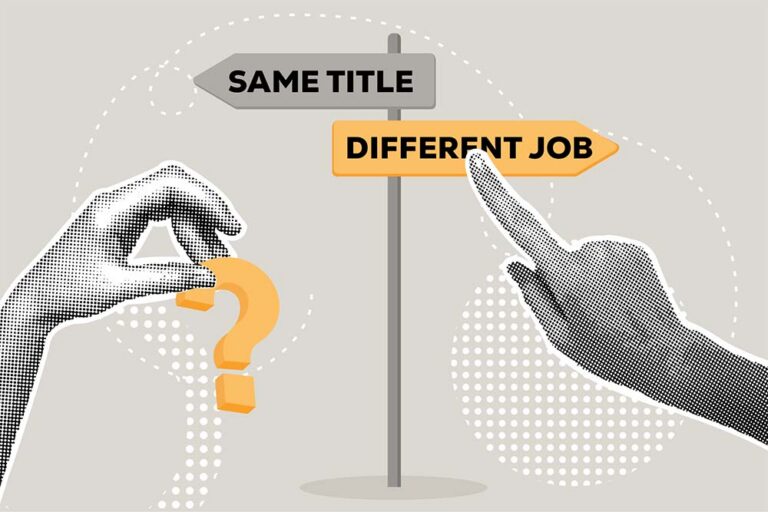
Titles are placeholders. Capability is what performs.
Earlier in my career leading regional teams, I spent a disproportionate amount of time on talent development. This was not because it was required, but because results depended on it. The ability to deliver the next quarter was directly tied to whether leaders on my teams could operate without constant intervention.
That lesson shows up repeatedly in organizations that build real pipelines: development is not something leaders do in addition to their roles. It is how work gets done.
Why Capability Matters More than Position
One of the most common failure points in succession efforts is positional thinking. Organizations ask, “Who could be our next Operations VP?” But the more important question is, “What capabilities will that VP role require three years from now?”
Titles are placeholders. Capability is what performs.
I learned this lesson early, and then had it reinforced later from the opposite side of the table. In executive search work, I saw companies hunting for titles when what they needed were capabilities: leading transformation, navigating ambiguity, building alignment.
This is where the Leadership Pipelineframework developed by Ram Charan, Stephen Drotter, and James Noel becomes particularly useful. Based on 30 years of Fortune 500 consulting work, it makes an important but often ignored point: leadership transitions are not incremental. Each one requires different skills, time allocations, and values.
Organizations like Microsoft, 3M, Home Depot, and Nokia use this framework not as theory, but as a diagnostic tool. Moving from managing others to managing managers isn’t just a title change, it’s a lane change. Leaders who don’t adjust how they operate cause friction in their new roles without understanding why.
In coaching work, when executives struggle, it’s usually because they’re applying the skills that made them successful at their previous level to a role that now demands something fundamentally different.
Culture Eats Your Succession Plan for Breakfast
Even the best frameworks fail in the wrong culture.
McKinsey’s research is clear: high-performing leadership teams will always outperform the capabilities of their individual members. But building those teams requires a culture that values specific behaviors:
Psychological safety. If emerging leaders can’t admit uncertainty or ask for support without fear, learning stalls. I coach executives through this constantly — the fear of appearing incompetent prevents the very learning that would make them competent at the next level.
Real accountability. When leaders are measured by and rewarded for how well they develop others, development advances.
Visible consequences. If hoarding talent carries no penalty and building it earns no advantage, development wastes away. In the healthiest organizations, promotions reflect not only what leaders deliver, but the strength of the leaders they develop.
Call Out: Organizations that embed leadership development into how they operate rarely go into panic mode, even when change comes quickly.
Organizations can transform quickly when these elements align because the system finally reinforces what it claims to value.
Three Non-Negotiables for Building a Working Pipeline
After coaching hundreds of leaders through organizational growth, disruption, and transitions, here’s what separates confident builders from scramblers:
1. Define “ready” based on future capability, not past success
Organizations optimized for yesterday’s challenges rarely have leaders ready for tomorrow’s needs.
Capability mapping starts with strategy, not incumbents.
2. Make development visible, continuous, and consequential
Real development happens through coached exposure – leaders operating just out of their comfort zones with support, feedback, and accountability.
3. Connect the pipeline to business performance
Using measurable data points like internal promotion rates, time-to-fill for critical roles, performance under internally developed leaders, and retention of high-potentials can sustain executive commitment.
When leaders ask for ROI on leadership development, these are the numbers that matter.
The Bottom Line: Strategic Imperative vs. HR Initiative
Succession is not an HR process; it is part of a leadership-building culture. Your choice is simple: build the pipeline now through deliberate development, or pay for it later through emergency hiring, prolonged vacancies, and the cultural disruption that comes when leadership continuity breaks down.
Organizations that embed leadership development into how they operate rarely go into panic mode, even when change comes quickly.
Leadership transitions will happen. Will your organization be prepared, or caught by surprise?
What’s Your Next Move?
If you’re questioning the strength of your own organization’s leadership pipeline, ask yourself one question: What did you do this week to develop your next generation of leaders?
Not what’s outlined in your succession plan. What actually happened?
That answer tells you more about your culture and leadership capability than any org chart can.
So where are you on this path? What’s working in your organization? Where are you stuck? How are you mapping leadership development to business results?