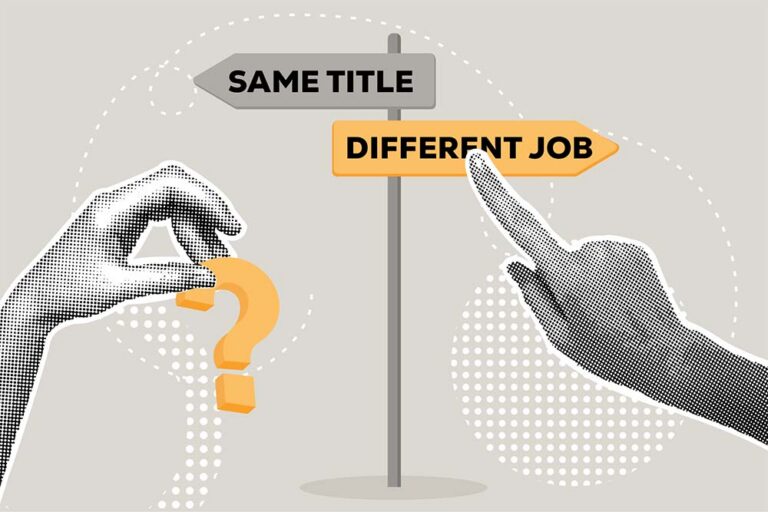


Every Org Change Moves Authority: Decide Where It Goes
In September, Uber’s CEO Dara Khosrowshahi told employees that the company was removing layers and cutting about 10% of its staff, a figure Bloomberg reported as roughly 3,300 people. The memo is precise about the mechanics. Uber reduced the number of employees sitting seven or more layers below the CEO by 20% and cut its one- and two-person teams by nearly half. It also removed roles built mainly around coordination.
His reason is one you have heard in your own building. Uber’s internal surveys showed that too much work needed cross-team coordination and that decision rights were unclear. He promised the result would be “clearer ownership, faster decisions, and more time spent building rather than coordinating.” He is probably right about the diagnosis. In my experience, a company that triples its revenue in five years also triples the number of people who have to agree before anything moves.
When you remove a layer of managers, the decisions they were making do not disappear. They go to whoever is left standing, or to no one. Twelve months from now your CEO will ask you why the bench got thinner and why judgment below the line got worse. You signed off on the org chart.
When you remove a layer of managers, the decisions they were making do not disappear. They go to whoever is left standing, or to no one.
Look at what a layer does on an ordinary Tuesday. A director with five managers under her decides whether a customer escalation is a one-off or a pattern. Two priorities collide and she picks which one wins this week. An analyst nobody above her has met gets a promotion case with her signature on it, and a manager who has plateaued gets the assignment that will test him. Those calls get made dozens of times a quarter.
The org chart shows a box. It does not show what the box decided.
McKinsey surveyed 706 middle managers in 2022 and found they spend nearly half their working time on work that is not managing at all. A full day a week goes to administration, and more hours go to individual-contributor tasks than to anything else. Talent and people management got 28% of their week. That 28% is the part of the layer a broader span cannot absorb. The coordination hours can be cut, but the people-focused work still has to go somewhere.
Gartner surveyed more than 800 HR leaders in July 2024 about the managers who would have to absorb that work. Three quarters said their managers were already overwhelmed by the growth in their responsibilities, and 69% said their leaders and managers were not equipped to lead change. Widen a manager’s span from five direct reports to 11 and the coaching time available to each person falls by more than half, with no change in the hours in a week. The manager who inherits the cut layer is among those your peers already describe as overwhelmed.
In my experience the reassignment happens by default. The manager who kept his job now carries more than twice as many direct reports as he had before. The first thing he drops is whatever never had a deadline: the career conversations, the stretch assignments, and the honest performance feedback. Nobody tells him to stop. The calendar does it for him.
Eighteen months later the promotion file for the level above him arrives empty, and the company hires from outside for a role it used to fill from within.
In most of the reorganizations I have watched, the cut comes first. Afterward, the people left behind get the job of working out which decisions still need making, who makes them now, and which work should stop to make room. That sorting rarely gets as much attention as the org chart did.
Bain surveyed nearly 1,000 executives and employees who had been through a reorganization and published the results in January. Of the leaders, 88% believed the new structure would deliver its goals. Among the employees working inside it, 36% agreed, and only 22% said they had received enough training, coaching, or tools to work the new way. In Bain’s findings, middle managers sat at the center of that gap: asked to carry the new model while their own jobs changed, with no clear guidance on workflows or decision rights.
The org chart shows a box. It does not show what the box decided.
Before the new chart goes out, take the layer you are removing and write down the calls it makes in a normal month. Some of those decisions should stop. Move each of the others to where it belongs now: closer to the customer, up to a more senior leader, or into a written rule that settles it in advance.
Then put a person’s name next to every decision that remains. Use a name rather than a title, because some boxes on the new chart may sit empty for months. A decision with no name beside it is a gap you are creating on purpose.
Look at spans next. Any manager going from five reports to nine or more is giving up part of the week. Ask each of those managers, “What will you stop doing?” If the answer is coaching or development rather than meetings and approvals, you have found where next year’s succession gap starts.
Then change the scorecard your CEO watches. Cost, headcount, and cycle time will improve within a quarter, and the cut will get the credit. Next to them, put three numbers the cut will not improve on its own.
What share of open roles at the level above the cut layer is being filled from inside? What is the regrettable attrition level among employees whose managers changed? Where are decisions escalating because the new owner is unclear? Set the review for 12 months out and put it on his calendar today.
A decision with no name beside it is a gap you are creating on purpose.
So sit down with the org chart before it is final and put the decisions beside the boxes. Take that page to your CEO before his memo goes out. If he asks why it is there, tell him the layer he is cutting was making those decisions, and someone still has to.
If you want a second set of eyes on which decisions your delayering plan leaves unowned, you can find a time here: Schedule a Meeting with Richard Smith